Sunday, March 18, 2012

Archives for July 2014

Students Map Niger with GPS Tracking

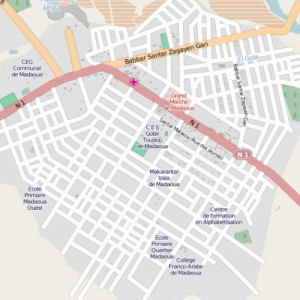
This map of Malamawa can be viewed on OpenStreetMaps thanks to the Mapping For Niger project

This map of Malamawa can be viewed on OpenStreetMaps thanks to the Mapping For Niger project

Sometimes I take for granted all of the maps available in the U.S. and many other countries. I just assume that if I am trying to find my way to Applebee’s in a new town, I can just punch it in and find the address and directions in seconds, but it isn’t like that everywhere. Places like Niger don’t have any reliable online maps and even the paper maps are sometimes outdated and many towns and roads simply don’t show up. For the last year, a handful of college students are working to change that using GPS tracking and mapping techniques. read more
New Study Reveals Health Benefits of Geocaching

Geocaching_LogoTexas A&M and the CDC have released a study showing that geocaching is healthier than not geocaching. Of course, I doubt that anyone thought geocaching was really bad for your health, but it’s always nice to know something you do is good for you! In this study, they tracked 1,000 geocachers throughout the U.S. aged 18-77 who geocached at least once a week. The study lasted for a year.

read more

Indoor Positioning Tech Gets $70M Funding

nextnav-logoA new startup company NexNav LLC has received  $70 million in funding for their indoor positioning technology designed to help give location data to emergency response teams. You may recall this article where we talked about how cell phones don’t give accurate GPS data during 911 calls. Well, now NexNav (owned by XM Satellite Radio founder Gary Parsons) has come up with their own solution.

“The existing GPS satellites are far away and send weak signals,” Parsons said to Wall Street Journal reporters, “and people are cutting the cord to their landlines, which means emergency responders don’t have the capability to identify and find them, reliably.” read more

8 Weird Uses for GPS

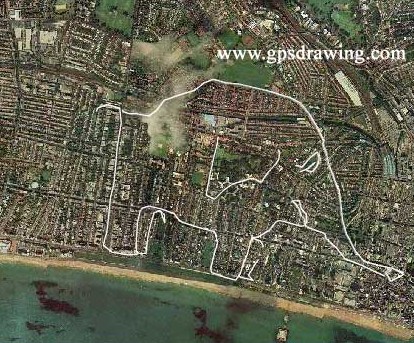
GPS drawing

One of the cooler–yet still odd–uses of GPS is GPS Drawing, pictured above.

GPS technology is becoming pretty advanced, and the list of uses for it is constantly getting longer. But are some of these really necessary? I have found what I think are some of the strangest uses for GPS currently available, so you can read through and tell me what you think. Most of these aren’t something that someone would use on a daily basis, but still odd for the fact that at some point, someone thought it was not only a good idea—but then did it.


1. Rat Remover – In Alaska, conservationists have used GPS to help remove rats from Rat Island in the Aleutians by using GPS guided rat pellets. The goal was to get rid of the rats so the seabirds will return to the island. No word whether or not it was successful, but GPS-guided rat poison is definitely a weird use in my book, and probably a bit of overkill (pardon the pun).

2. See who is around you – The Happn app creates a profile for you (pulling pictures and relationship data, likes and other information) based on your social media accounts (mostly Facebook), and then will tell you who you have ‘crossed paths’ with using GPS. The app insists that they are very careful with your information and there are protections in place so you can block people from seeing your location…but still. Seems a little stalker-y that someone you walk past could check you out on Facebook to see if they want to pursue a conversation. Kinda weird. read more

Track Your Luggage Without A Bulky Tag

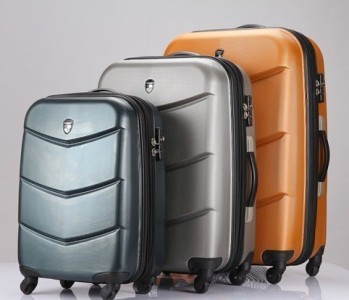
KONAS LuggageAs we have written about in the past, losing your luggage when traveling is a serious problem that thousands of people suffer from every year. Companies and private inventors have been working towards a solution to this problem—most of which require a tag attached to the outside of the bag in question, and many don’t actually use the more reliable GPS technology.
The newest iteration of bag-tracking solutions doesn’t involve any kind of tag; the tracking is done by the bag itself. Introducing the KONAS luggage and hiking backpacks, which contain a tracking chip that works with WiFi, GSM and GPS to allow travelers to track the location with a smartphone. This service is currently free of charge to all users. read more

DARPA Working to Replace GPS With Better Tech

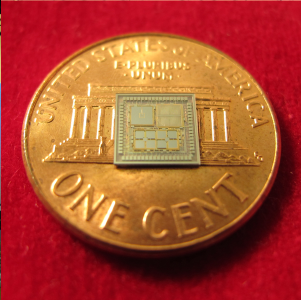
This micro-ANS chip is one of five inventions DARPA is working on to help improve or replace GPS

This micro-ANS chip is one of five inventions DARPA is working on to help improve or replace GPS

GPS has become such an integral part of modern technology, it is hard to imagine how most of it would work if this revolutionary technology wasn’t around. It seems like everything has GPS chips nowadays: cars, boats, trains, planes, phones and watches to name a few.

But all technology has limitations, and GPS is no exception. Signals cannot be received underground, underwater or inside buildings. The signals are significantly degraded during solar storms and are susceptible to jamming and spoofing, making GPS navigation a little dangerous for military purposes.

To address this, DARPA has been researching new ways to provide real-time positioning, navigation and timing (PNT) information to replace GPS. A lot of these innovations are super technical and still in the experimental phase, but they seem pretty cool.

DARPA’s current PNT portfolio includes five programs, focused wholly or in part on PNT-related technology: read more

This Week in GPS — July 25, 2014

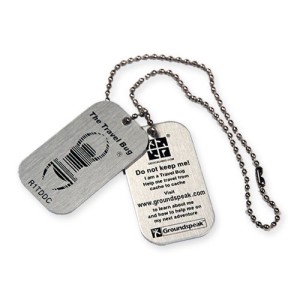
travel bugThis week in GPS is a weekly link roundup of (mostly) GPS related odds and ends, from GPS Tracklog and other places around the Web. This week’s featured image is a Travel Bug, which we talked about on Thursday in our Geocaching Guide to Traveling Items. read more

Suprising Map Reading Statistics

Garmin has, apparently, released a study showing that a staggering amount of people are utterly unable to read a paper map. While I cannot find the actual research from Garmin, several websites (like this and this) have reported that more than one third (39%) of people surveyed did not know how to navigate using a ‘traditional’ map and need guided step-by-step directions. One in 10 (16%) said they relied heavily on a GPS device of some kind and nearly half of the people surveyed (40%) said they never updated their GPS devices.
Unsurprisingly, the same study reported that about 40% of people wouldn’t openly admit when they get lost due to embarrassment, and nearly a third refuse to seek help or ask for directions. The study indicated that men are more likely than women to refuse to seek help (27% more to be exact) and that arguments over driving directions is a lot more common than you might think–roughly 33% said they regularly had arguments with their partner about directions. read more

New Motorcycle Mount for GPS Released Today

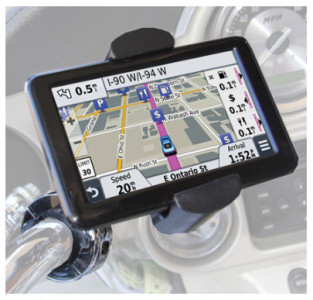
Techgripper nuviToday, PowerSportsUS has announced the release of their newest motorcycle mount, the TechGripper. This super strong mount can be attached to a motorcycle in a number of ways and has a range from 2 inches to 4.2 inches, allowing users to mount small GPS devices or even a phone without having to remove the phone case. This mount has an 18-pound per inch grip using stainless steel springs and a super strong polymer resin.

read more

Geocaching: Traveling Items Guide

travel bugPart of what makes geocaching so fun is getting to explore the world around you and experiencing that thrill when you find the hidden cache. A lot of times, the treasures inside aren’t really anything super exciting—just trinkets and little items. Occasionally, though, you’ll come across a traveling item.

In my opinion, these traveling items are probably one of the cooler parts of geocaching. A traveling item is exactly what it sounds like: an item that has a goal or destination which generally involves traveling (duh). A geocacher’s job when they find a traveling item is to try and help it reach its goal–which might be as vague as traveling “as far as possible” to extremely specific, detailing a certain place it wants to be or even just a set of parameters such as “stay near water.”

But there are at least three different kinds of traveling items and etiquette that geocachers need to be aware of before removing them. read more