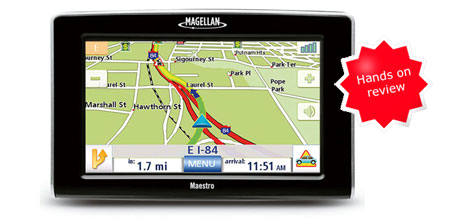
The Magellan Maestro 5310 is Magellan’s first GPS with a 5″ screen. It has preloaded maps of the U.S. and Canada, six million POIs and text-to-speech, so you’ll hear “approaching right turn, Maple Street” instead of just “approaching right turn.”
GPS reviews, news, tips, tricks and deals

The Magellan Maestro 5310 is Magellan’s first GPS with a 5″ screen. It has preloaded maps of the U.S. and Canada, six million POIs and text-to-speech, so you’ll hear “approaching right turn, Maple Street” instead of just “approaching right turn.”
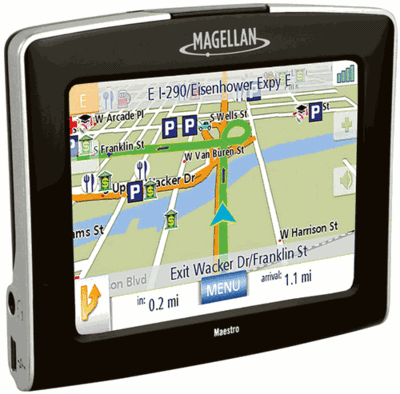
The Magellan Maestro 3250 is one of Magellan’s new thinner (0.7″) line of Maestros. Like the Maestro 3210, it has a 3.5″ screen, six million points of interest (POIs), pre-loaded maps of the U.S. and Canada, and the SiRFstar III chipset.
The Magellan RoadMate 1200 seems like it was designed just to satisfy the market’s demand for a low-end, entry level GPS. It has only 1.3 million points of interest (POIs), a 3.5″ color touch-screen and comes pre-loaded with maps of the entire U.S. except Alaska. For an in-depth look at the RoadMate series, check out my hands-on review of the Magellan RoadMate 1412.
The Magellan Maestro 3200 is the entry-level device in Magellan’s thinner and lighter second generation Maestro line up. It has a 3.5″ color touch screen, preloaded maps of the entire U.S. except Alaska, and 1.3 million points of interest (POIs).
Step up to the Maestro 3210 and you’ll get maps of Alaska and Canada, six million POIs, and AAA TourBook info.
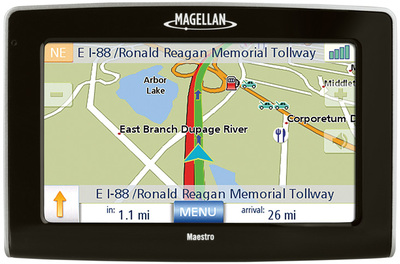
The Magellan Maestro 4250 updates the Magellan 4050. Thinner and lighter, it also increases the number of points of interest (POIs) available to 6 million, compared to the 4050’s 4.5 million. Otherwise, the two units are identical in their key specs. Both offer pre-loaded maps of the U.S. and Canada, text-to-speech, Bluetooth and live traffic info.
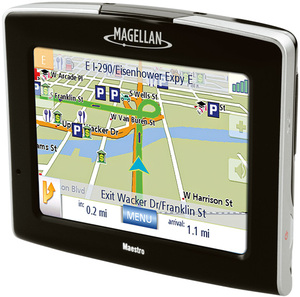
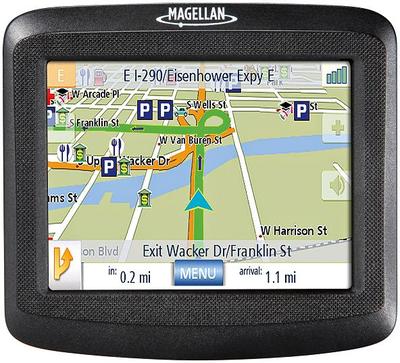
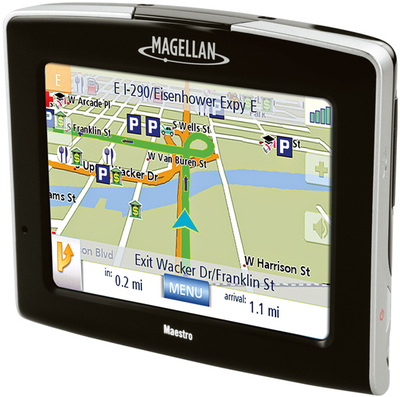
The Magellan Maestro 3210 is one of Magellan’s new thinner (0.7″) line of Maestros. It has a 3.5″ screen, six million points of interest (POIs), pre-loaded maps of the U.S. and Canada, and the SiRFstar III chipset. What it doesn’t have is text-to-speech, so you’ll get “turn right in 200 feet” rather than “turn right on Oak Street in 200 feet.” Nor does it have Bluetooth or live traffic capabilities.
Step up to the Maestro 3220 to get maps of Mexico too. Meanwhile, the Maestro 3250 adds text-to-speech, Bluetooth, traffic and voice commands to the 3210’s feature set. Going the other direction, the basic Maestro 3200 has a very weak 1.3 million POIs and drops the maps of Canada and Alaska. Finally, the 4200 series boosts the screen size to 4.3″.
UPDATE: This model has been discontinued. For current recommendations, please refer to our auto GPS buyers guide or check out our other Magellan auto GPS reviews.
The Magellan Maestro 4050 is one of the first GPS navigators to feature voice recognition, allowing you to speak commands. The available commands aren’t limitless though, and this is new technology, so there are bound to be a few bugs due to ambient noise, etc. Nevertheless, it certainly is very cool to be able to issue commands just by speaking to your GPS.
Before we go any further, let’s take a look at the rest of the feature set. Like its sibling, the Maestro 4040, the Maestro 4050 has a 4.3″ wide-screen, the SiRFstar III chipset, Bluetooth for hands-free cell phone use and preloaded maps of the U.S., Canada and Puerto Rico. Both units also have 4.5 million points of interest (POIs) and they both call out street names for upcoming turns.
What separates it from the 4040 is the that the Magellan Maestro 4050 has live-traffic included (an option on the 4040) and the previously mentioned voice-recognition feature.
To see how the 4050 stacks up against other units, check out my Magellan auto GPS comparison chart.
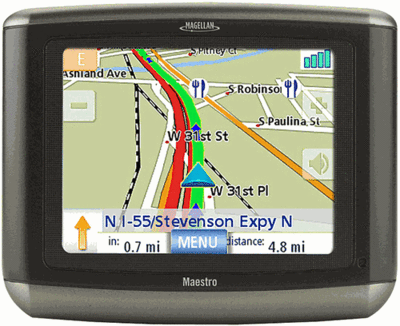
UPDATE: This model has been discontinued. For current recommendations, please refer to our auto GPS buyers guide or check out our other Magellan auto GPS reviews.
The Magellan Maestro 3140 is part of Magellan’s new line up of GPS navigators. Like the Magellan Maestro 3100, It comes with a 3.5″ touch screen and the SiRFstar III chipset. Unlike the 3100, the Maestro 3140 has Bluetooth for hands-free cell phone use, live traffic as an add-on option, and it calls out street names for upcoming turns, so you’ll get “turn right on Main Street” instead of just “turn right.”
The 3140 has pre-loaded maps of the entire U.S., Canada and Puerto Rico, while the 3100 just has the lower 48 states. A big difference, in my mind, is that the 3140 has 4.5 million points of interest (POIs), versus an anemic 750,000 POIs for the entry-level 3100.
Moving up to the Magellan Maestro 4000 series gets you a 4.3″ wide-screen interface.
UPDATE: A newer lineup, the Maestro 3200 and 4200 series, is a little thinner and lighter than the original Maestros.
To see how the 3140 stacks up against other units, check out my Magellan auto GPS comparison chart.
UPDATE: This model has been discontinued. For current recommendations, please refer to our auto GPS buyers guide or check out our other Magellan auto GPS reviews.
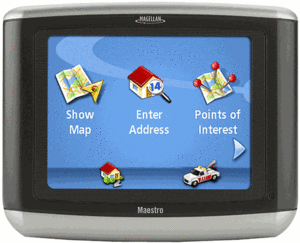
The Magellan Maestro 3100 is the entry level GPS in the Magellan Maestro series. It has a 3.5″ touch-screen, the super-sensitive SiRFstar III chipset, 750,000 points of interest (POIs), and is pre-loaded with maps of the 48 contiguous United States.
I have not been very impressed with receivers with such a low number of POIs. Even units with 1.5 million POIs have frequently failed to turn up the store, restaurant, etc. that I was looking for, meaning that I would need to enter the address for navigation (if I even had it). Other reviewers, linked to below, didn’t seem to have many problems with the Maestro 3100 though. Perhaps they are in areas without as many new stores, etc.
UPDATE: This model has been discontinued. For current recommendations, please refer to our auto GPS buyers guide or check out our other Magellan auto GPS reviews.
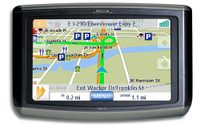
The Magellan Maestro 4040 is part of Magellan’s newest lineup — the Maestro series. Like all members of the Maestro family, the 4040 has a wide 4.3″ screen, voice-prompted directions, AAA travel information and a SiRFstarIII chipset. The 4040 also has preloaded maps of the U.S., Canada, and Puerto Rico, 4.5 million points of interest (POIs), and Bluetooth for hands free cell phone use. Additionally, it will call out the street names for upcoming turns.

Copyright © 2026 · Sitemap · Disclosure · Privacy policy · Log in