Sunday, March 18, 2012

Archives for 2007

How many Points of Interest (POIs) do you need?

Pois
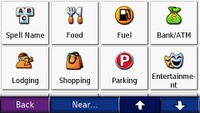
Points of interest (POIs) are, just as the name implies, a geographic point that may be of interest to you. They are typically divided into categories like dining, shopping, lodging, recreation, etc. If you are navigating to a business, you are likely to use a POI; if you are navigating to a residence, you’ll probably enter an address instead. 

These days, most auto GPS receivers come with anywhere from 750,000 to 6 million or more POIs. I find units with 2 million or less POIs to be extremely frustrating to use, since often, the business I am searching for is not in the database.

read more

GPS theft prevention with GadgetTrak

Gadgettrak
GadgetTrak, an Oregon company, has expanded the range of GPS devices they can protect from theft. Or more accurately, help recover if they are stolen.  Their system works when the thief, or someone he sells the stolen unit to, connects the device to a PC. The IP address, general location, computer name, user name, ISP and host name are relayed to you in an email. Of course, this doesn’t guarantee recovery. Here’s what GadgetTrak has to say about that:

read more

Magellan Maestro 4050 review

Magellan_maestro_4050
UPDATE: This model has been discontinued. For current recommendations, please refer to our auto GPS buyers guide or check out our other Magellan auto GPS reviews.

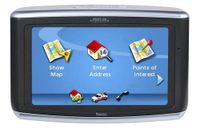
The Magellan Maestro 4050 is one of the first GPS navigators to feature voice recognition, allowing you to speak commands. The available commands aren’t limitless though, and this is new technology, so there are bound to be a few bugs due to ambient noise, etc. Nevertheless, it certainly is very cool to be able to issue commands just by speaking to your GPS.
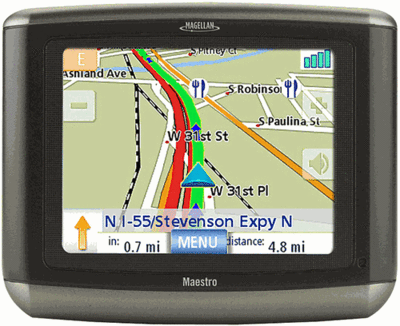
Before we go any further, let’s take a look at the rest of the feature set. Like its sibling, the Maestro 4040, the Maestro 4050 has a 4.3″ wide-screen, the SiRFstar III chipset, Bluetooth for hands-free cell phone use and preloaded maps of the U.S., Canada and Puerto Rico. Both units also have 4.5 million points of interest (POIs) and they both call out street names for upcoming turns.

What separates it from the 4040 is the that the Magellan Maestro 4050 has live-traffic included (an option on the 4040) and the previously mentioned voice-recognition feature.

To see how the 4050 stacks up against other units, check out my Magellan auto GPS comparison chart.

read more

Magellan Maestro 3140 review

Magellan_maestro_3140

UPDATE: This model has been discontinued. For current recommendations, please refer to our auto GPS buyers guide or check out our other Magellan auto GPS reviews.

The Magellan Maestro 3140 is part of Magellan’s new line up of GPS navigators. Like the Magellan Maestro 3100, It comes with a 3.5″ touch screen and the SiRFstar III chipset. Unlike the 3100, the Maestro 3140 has Bluetooth for hands-free cell phone use, live traffic as an add-on option, and it calls out street names for upcoming turns, so you’ll get “turn right on Main Street” instead of just “turn right.”

The 3140 has pre-loaded maps of the entire U.S., Canada and Puerto Rico, while the 3100 just has the lower 48 states.  A big difference, in my mind, is that the 3140 has 4.5 million points of interest (POIs), versus an anemic 750,000 POIs for the entry-level 3100.

Moving up to the Magellan Maestro 4000 series gets you a 4.3″ wide-screen interface.

UPDATE: A newer lineup, the Maestro 3200 and 4200 series, is a little thinner and lighter than the original Maestros.

To see how the 3140 stacks up against other units, check out my Magellan auto GPS comparison chart.

read more

TomTom GO 720 and MapShare

Tomtom_go_720UPDATE: Read our TomTom GO 720 review.

TomTom announced the TomTom GO 720 today, a wide-screen, (4.3") flat form factor GPS navigator. There are lots of juicy details, which we’ll get to momentarily, but the big news is MapShare.

MapShare

From the press release….

This unique new map improvement technology allows TomTom users to easily improve their maps as soon as they spot changes in the roads with a few touches on the screen of their device. Via TomTom HOME, TomTom Map Share™ users also receive all map improvements made by others, making their maps as dynamic as the world they live in.

TomTom Map Share™ is a proprietary map improvement technology unique to TomTom, which enables users to easily and instantly improve maps. TomTom users can respond in real time to changes in the road network and correct the maps on their TomTom devices accordingly. Thanks to the smart user interface, it is easy to make improvements, such as to mark blocked or unblocked streets, reverse one way traffic or insert new street names, which will instantly take effect.


EDIT:
Initially, six types of corrections will be allowed, though more are expected to be added later:

  • (un)Block a street
  • Reverse driving direction
  • Change a street name
  • Add a missing Point Of Interest (POI)
  • Remove or rename a POI
  • Add or change a POI phone number

read more

New Garmin eTrex models officially announced

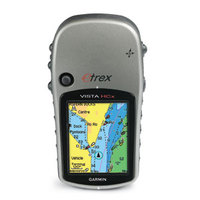
Etrex_vista_hcx_2UPDATE: Read our eTrex H-series reviews:

Last week I reported on rumors of a new Garmin eTrex lineup with a high-sensitivity chipset. Today it’s official — Garmin has announced, and put up product pages for the following units:

  • eTrex H – Monochrome display, MSRP $99.99
  • eTrex Venture HC – Color display, MSRP $199.99
  • eTrex Summit HC – Color display, barometric altimeter, electronic compass, MSRP $249.99
  • eTrex Legend HCx – Color display, expandable memory, MSRP $269.99
  • eTrex Vista HCx – Color display, expandable memory, barometric altimeter, electronic compass, MSRP $299.99

It’s nice to see features previously limited to the 60 and 76 x-series in a compact unit. I’ve included the manufacturers suggested retail price (MSRP) above as we’re also seeing a price drop compared to some past eTrex models and units with comparable features.

All models are capable of accepting detailed maps except for the basic eTrex H. The Summit HC and Venture HC map capacity is limited, due to their 24MB of internal memory. The Legend HCx and Vista HCx offer autorouting.

The new eTrex line is expected to be available in the third quarter of this year.

Garmin opens up

Garmin_logo_pms_rgb_3
Garmin has published an API and taken several steps to open Garmin devices to third-party generated content.

The Garmin Communicator Plugin API beta "allows developers to transfer location data – such as waypoints, track logs, maps and points of interest (POIs) – to and from a website and Garmin device." I find it especially interesting that maps are included in that statement. Perhaps we’ll start seeing more third-party map providers now that Garmin has given them tacit approval. Geocaching.com and Motionbased.com are both using the technology behind this, though users may have to download a plugin to ensure that it works with their browser. Currently IE 6+ and Firefox 1.5+ are supported. Mac support is "coming soon."

Many of the other tools announced today move Garmin farther into the location-based services game:

read more

Garmin nuvi 270 review

Nuvi_270_right

UPDATE: A newer 3.5″ trans-Atlantic unit, the Garmin nuvi 275T, has recently been introduced.

UPDATE 2: This model has been discontinued. For current recommendations, please refer to our auto GPS buyers guide.

UPDATE 3: The latest trans-Atlantic navigators to be introduced are the Garmin nuvi 2475LT and nuvi 2370LT.

The Garmin nuvi 270 is the transatlantic offering in Garmin’s new entry-level nuvi lineup. Equipped with a 3.5″ screen, the nuvi 270 includes pre-loaded maps of the U.S., Canada and Europe (see coverage map below). Other units in the 200 series have less extensive coverage; the nuvi 200 has maps of all 49 continental United States, while the nuvi 250 offers all 50 states and Canada.

read more

Garmin TOPO U.S. 2008

Topo_us_2008_screen
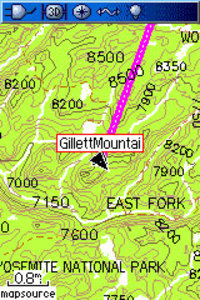
Garmin has announced an updated version of its backcountry maps for the U.S. – Garmin TOPO U.S. 2008. There’s not a huge amount of information available yet.

What’s known now is that the maps use 1:100,000 scale data, not 1:24,000 – a disappointment. The maps do include some new features, including the ability to generate elevation profiles on your PC or compatible Garmin receivers (shown below, after the jump), though that will be of little use if they are generated from straight lines rather than along trails. No word yet on whether there is auto-routing for trails or roads, nor do we know if this map product will be locked.

TOPO U.S. 2008 will be available on DVD or micro SD cards. Garmin has not posted an availability date.

There is a discussion thread on Groundspeak, Geocaching.com’s message board.

Via Allory.

read more

Galileo and Garmin

Galileo
A couple of days ago, I posted a story about several new Garmin eTrex GPS units due this fall. At that point, the Canadian PDF catalog page was not available online, but it’s back now and the full story can be told.

The big news isn’t the high-sensitivity chipset, it’s this blurb from the ad…

Also “GALILEO” (the new navigation system under development in Europe) ready as a future path that will accommodate a drop–in chip when available in the future.

That’s pretty exciting except for the fact that Galileo literally can’t get off the ground. According to what I’ve been able to find, only one of 30 satellites has been successfully launched. So Galileo compatibility, while it does show Garmin adding a (potential) new feature to its handhelds, is hardly a good reason to buy one of the new eTrex units.